Solution-Focused Therapy

Solution-Focused Therapy

Co-authored by Dariusz Szajnert MSW, LCSW and Catherine Myers MSW, LCSWA, LCASA

What we like about Solution Focused Therapy (SFT)?

 “There is something amazing that happens in a session when a previously un-recognized or unearthed success is revealed. It’s a powerful moment to see someone in a session consciously become aware of an achievement they overlooked. That reminder of what they did, how they did it, and that they can do it again builds their confidence!”

–  Dariusz Szajnert
MSW, LCSW

“Solution-Focused Therapy is action-oriented and focused on moving forward. I enjoy collaborating with clients to create realistic, meaningful goals and celebrating the progress they've already made. Recognizing strengths and small successes often builds the confidence needed for lasting change.”

- Catherine Myers
MSW, LCSWA, LCASA


How did Solution Focused Therapy get started?

Solution-Focused Therapy is an evidence based therapeutic approach developed in the 1970’s and 1980’s by Insoo Kim Berg and Steve De Shazer. Insoo Kim Berg was a Korean born American therapist born in 1934 in Korea, moved to the USA in 1957, and became a therapist. Steve De Shazer grew up in Milwaukee in the 1940’s and 1950’s, was a therapist in California. They met as colleagues, researched together, became a couple, and later married. They moved to Milwaukee and co-founded the Brief Family Therapy Center and pioneered Solution-Focused Brief Therapy.

Solution-Focused Therapy (SFT) is a future oriented approach that emphasizes:

•  Identifying strengths
•  Building on past and existing
    successes
•  Creating practical solutions
   rather than becoming stuck in
   problems

By focusing on what is working, clients often feel more empowered to create meaningful change in their lives. SFT can be especially effective for individuals facing stress or major life transitions, as it highlights resilience and actionable steps forward. Rather than focusing on the origins of a problem, SFT encourages clients to recognize their existing resources and apply them to current challenges. The therapist is curious to learn more about the capabilities the client possesses and their abilities, rather than taking an all-knowing expert stance as a mental health professional. This collaborative approach helps foster a greater sense of control over one’s circumstances. 

Who can benefit
from SFT? 


Solutions Focused Therapy is beneficial as part of treatment for following in mental health:

• Depression
• Anxiety
• ADHD
• Autism
• Managing stress,
   including academic
   and work struggles
• Self-Esteem issues
• Interpersonal conflicts
   in relationships (including
   in families, and for couples)
• Life transitions
• Children/adolescent
   behavior issues
• Adolescents reluctant to discuss     emotions in depth
• Military personnel and veterans
• Addiction and Substance use

Who can benefit from solution-focused therapy for personal growth and positive change in Raleigh Chapel Hill North carolina

Wondering what’s the length of time for this Solution-Focused
Brief Therapy? 

For many after 4-8 sessions they may feel better and can continue changes started on their own.

Solution Focused Therapy can be used longer, beyond 8 sessions depending on the complexity of the challenges experienced, pace of progress, multifaceted issues being worked on (i.e. dual diagnosis, comorbid disorder), or evolving/more broad goals.
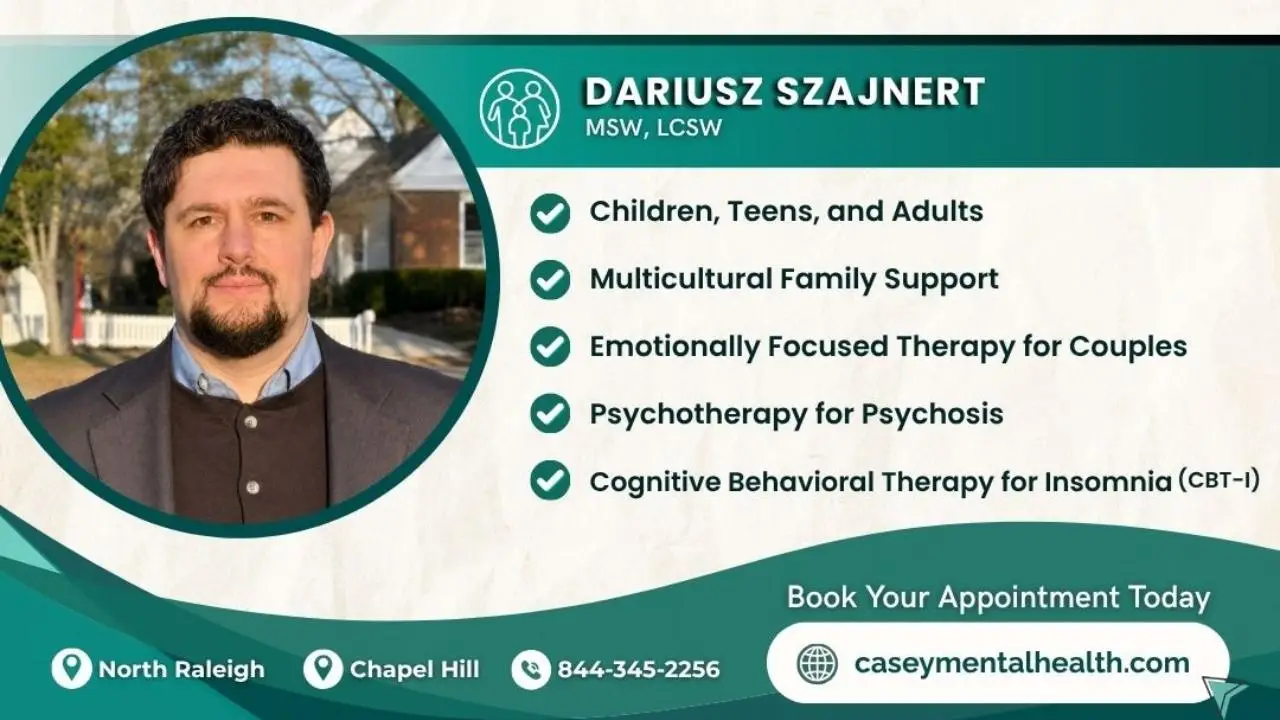
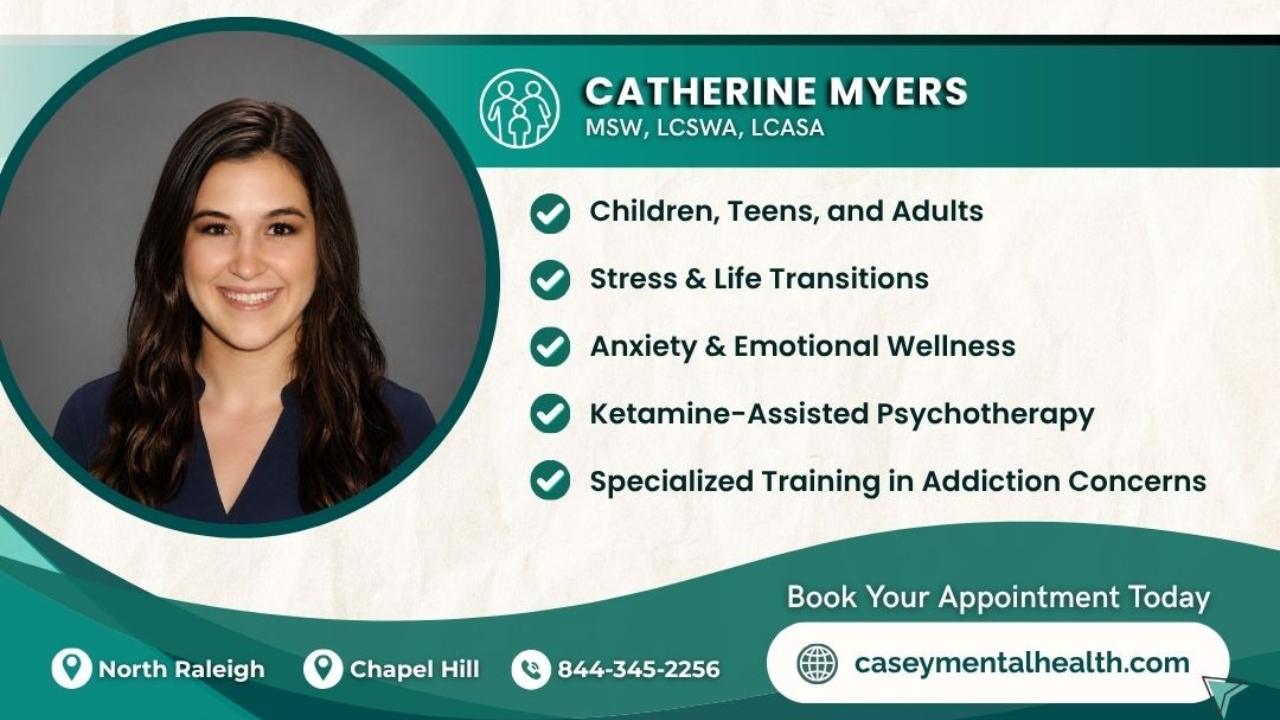
What Can Marvel Superheroes Teach Us About Mental Health? – By Dariusz Szajnert MSW, LCSW

🦸‍♂️ What Can Marvel Superheroes Teach Us About Mental Health?

 The eight-pointed star on his chest represents direction, strength, and emotional insight—qualities he brings to his work supporting kids, teens, and families at CMHC.
Illustration of therapist Dariusz Szajnert reimagined as a superhero.

– By Dariusz Szajnert MSW, LCSW

You’ve probably seen at least one of the Marvel superhero movies—maybe Thor, Hulk, Iron Man, or Black Panther. But have you ever wondered how a story about superheroes could possibly teach us anything about mental health?

If that sounds surprising—or even entertaining—watch as Dr. Eric Bender, a psychiatrist and media consultant, breaks down the psychology of some of Marvel’s biggest heroes. He explores the emotional layers behind anger, grief, trauma, resilience, and identity in ways that are relatable and thought-provoking.

While Dr. Bender is not affiliated with Casey Mental Health Collaborative (CMHC), we appreciate his creative, stigma-reducing approach to sparking conversations about mental health. May sharing this video lead to more understanding—and offer encouragement to reach out if you or someone you love needs support.

🎥 Watch: Psychiatrist Breaks Down Marvel Superhero Psyches | GQ
https://www.youtube.com/watch?v=zrpN3d0gQKg

—

🛑 Disclaimer: This video and blog post are intended for informational and educational purposes only. They do not constitute medical advice or replace professional mental health care. If you’re struggling, please contact a licensed provider.

If you live in NC and could use some support, we’d be honored if you’d have us.

Help me become a new client/patient

How to Talk to Your Kids About Immigration: ​Starting Conversations Around Values, Empathy, and Belonging – By Dariusz Szajnert MSW, LCSW

How to Talk to Your Kids About Immigration: A Values-Based Conversation for Families

— By Dariusz Szajnert MSW, LCSWA

Immigration is a deeply human experience—one that touches many families directly, and others indirectly through friendships, school communities, or media exposure. It’s not uncommon for children to ask big questions about it, like:

🗣 “Why do some people have to leave?”
🗣 “What does deportation mean?”
🗣 “Why can’t everyone just stay?”
🗣 “Why do people want to come to the United States?”
🗣 “Why would someone leave their home country if it’s where their family is?”

These questions are often prompted by news stories, overheard conversations, or personal relationships—and they can stir up confusion, fear, or empathy in your child.

As a parent, you don’t have to know all the answers. What matters most is offering a safe, calm, and values-centered space to explore these conversations. Whether your child is hearing about immigration in the news or wondering why a friend’s family is worried, this is a meaningful opportunity to talk about empathy, fairness, and belonging—without turning the conversation political.

Start with Stories, Not Policies
Children relate to people, not policies. Instead of diving into legal explanations, begin with stories that humanize the immigration experience. This might be your own family’s migration journey, or a fictional character in a book or movie.

📚 Try reading or watching together:

Ask questions like:
“What would it feel like to move somewhere new?”
“What would you bring with you?”
“What would be scary? What might be exciting?”

When Kids Ask About Deportation
If your child has heard about deportation and is worried or confused, keep your response grounded in empathy and simplicity.

You might say:
“Sometimes, people move to a new country for safety, work, or to take care of their families—but the laws about who can stay are complicated. When someone doesn’t have the right papers or permission, the government might ask them to leave. That’s called deportation.”

Then follow up with a values-based reassurance:
“Even if we don’t always understand the rules, we believe that every person deserves to be treated with kindness and respect.”

If your child is worried about someone they know:
“Thank you for caring so much about your friend. That shows what a kind and thoughtful person you are. The best thing we can do is be a good friend and make sure they feel safe when they’re with us.”

Anchor the Conversation in Your Family’s Values
Immigration can feel complex, but the values you want to pass on are likely simple and clear. Use this opportunity to talk about what matters most in your family:

  • Kindness: We treat people with compassion, even when we don’t know their whole story.
  • Fairness: We believe everyone should have a chance to be safe and supported.
  • Belonging: We try to help people feel welcome wherever we are.

By focusing on shared values rather than political sides, you help your child build a sense of identity and moral compass rooted in empathy and respect.

Encourage Empathy Through Curiosity
Instead of correcting your child if they repeat something worrisome or confusing, get curious:

“What made you think about that?”
“How do you think someone in that situation might feel?”

This not only builds emotional intelligence, but models how to listen first and respond with care—a lifelong skill.

Explore Global Perspectives and Traditions
Even if your child doesn’t ask about immigration directly, you can help them appreciate the richness of global traditions and everyday experiences from other communities:

  • Try foods from different countries
  • Attend local events that feature music, stories, or dance from other parts of the world
  • Learn basic greetings in another language together
  • Talk about how people from around the world contribute to your town or school

The more your child becomes curious and appreciative of others’ experiences, the more they develop openness, empathy, and a strong sense of shared humanity.

Family Resources to Learn MoreIf you’d like to continue the conversation with your child, here are some resources created with families and children in mind:

  • EmbraceRace: Offers tools and webinars for raising children who are thoughtful and inclusive, including materials on talking about immigration and race.
  • Teaching Tolerance / Learning for Justice: Offers family-friendly articles and lesson plans about identity, inclusion, and the immigrant experience.
  • Immigration History: An age-appropriate portal of immigration history and a list of books helpful for elementary and middle school ages (under resources).
  • PBS Kids: Explore topics like belonging and empathy through shows like Molly of Denali and Arthur. Videos and talking points based on the Arthur series, can help young children understand themes of empathy and movement.
  • Sesame Workshop: Displacement and Resettlement: Supportive content for very young children and caregivers.

Final Thoughts
When children ask about immigration or deportation, they aren’t always seeking detailed explanations—they’re looking for reassurance, truth, and a sense of where your family stands. These moments are an invitation to talk about what it means to be human: to move, to change, to hope, and to care for one another.

Whether your family has deep immigrant roots or is just learning about this topic for the first time, talking about immigration through the lens of values and empathy can help raise emotionally intelligent, compassionate kids—who will grow up seeing everyone’s story as worth listening to.

Click HERE to read more about our Providers for Online and In-Person (located in North Raleigh, NC and in Chapel Hill, NC) services.  If you are ready to become a new client/patient click HERE to fill out our forms and to get scheduled ASAP!
